MDR-GNIs

Scientific News
Aug 26

Targeting carbapenem-resistant and hypervirulent Klebsiella pneumoniae: in vitro evaluation of cefepime/zidebactam, aztreonam/avibactam, imipenem/relebactam, and meropenem/vaborbactam.
Li Y, et al. BMC Infect Dis. 2026 Mar 13;26(1):797.
An in vitro study compared cefepime-zidebactam, aztreonam-avibactam and other recently developed agents against carbapenem-resistant hypervirulent Klebsiella pneumoniae. The susceptibility rates of CR-hvKP to cefepime/zidebactam and aztreonam/avibactam all exceeded 90%, with rates of 98.1% and 99.1%, respectively. CR-hvKP exhibited susceptibility rates of 57.5% and 65.1% to imipenem/relebactam and meropenem/vaborbactam, respectively. Several novel combinations retained activity against isolates carrying complex resistance determinants, supporting their potential role against this emerging high-risk pathogen.
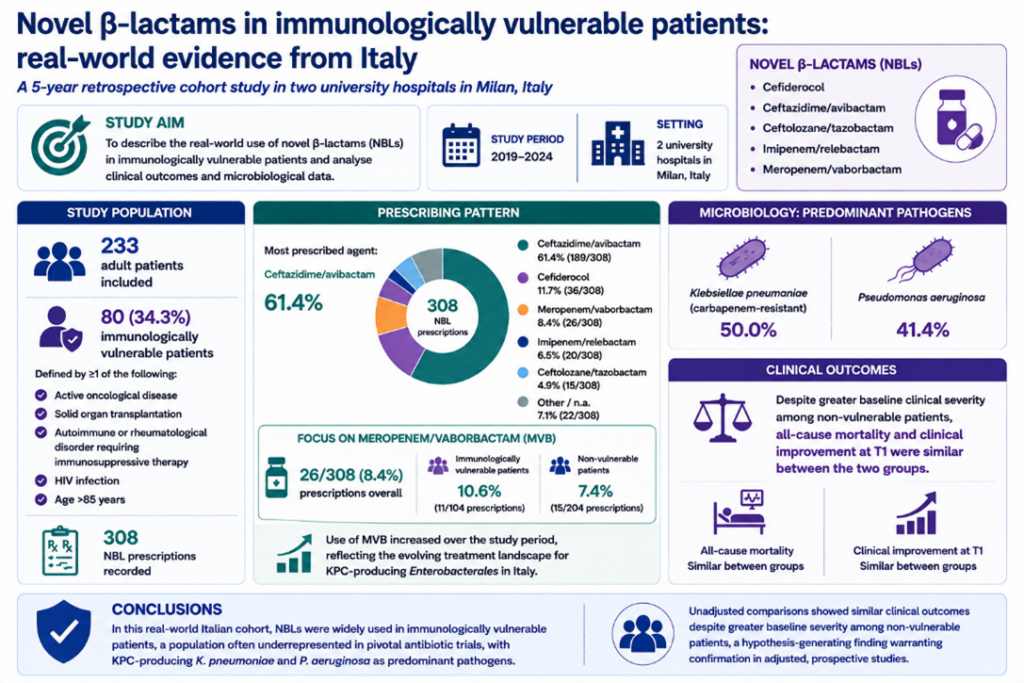
Real-world use of novel β-lactams in immunologically vulnerable patients: insights from an Italian retrospective cohort
Bognetti M, et al. JAC Antimicrob Resist. 2026 Aug 24;8(4):dlag171.
A 5-year retrospective study evaluated 233 patients and 308 novel β-lactam prescriptions, including 80 (34.3%) immunologically vulnerable patients, across two Italian hospitals. Carbapenem-resistant K. pneumoniae (50.0%) and P. aeruginosa (41.4%) were the predominant pathogens, while clinical improvement and all-cause mortality were similar between vulnerable and non-vulnerable patients in unadjusted comparisons. Meropenem/vaborbactam accounted for 8.4% (26/308) of prescriptions, including 10.6% in immunologically vulnerable and 7.4% in non-vulnerable patients; its use increased over the study period, reflecting the evolving treatment landscape for KPC-producing Enterobacterales in Italy.
Competitors
Outbreak-driven dissemination of KPC variant–producing Klebsiella pneumoniae: the emerging challenge of ceftazidime/avibactam and cefiderocol co-resistance
Capitani V. et al - Surveillance Antimicrobial Resistance & Infection Control – online published: 19 August 2026.
A 3-year ICU study investigated the emergence and transmission of ceftazidime/avibactam-resistant (CZA-R) K. pneumoniae. Among patients receiving CZA, 9% tested positive for CZA-R strains. While in vivo evolution accounted for most resistant isolates (71.4%), 28.6% resulted from horizontal transmission, involving three distinct outbreaks. Eight KPC variants were identified, including the novel KPC-295, and 76.2% of CZA-R isolates were also resistant to cefiderocol (FDC). The findings highlight the potential contribution of hospital transmission to CZA resistance and support strengthened microbiological surveillance and infection-control measures in ICU settings.
Real-world experience with cefiderocol in hematologic patients with malignancies
Martinez-Urrea A. et al.- Int J Infect Dis, Volume 171, October 2026, 108865
A multicentre retrospective study evaluated cefiderocol use in 28 patients with haematological malignancies, 57.1% of whom were colonized with MDR organisms. Microbiological documentation was available in 85.7% of patients, with MDR pathogens identified in 75% and P. aeruginosa being the most frequent isolate (46.4%). While clinical responses were observed and no safety signals emerged, cefiderocol resistance was documented, including on-treatment resistance development in a P. aeruginosa infection. Overall 30-day mortality was 35.7%. These findings highlight the need for further research to optimize cefiderocol use and address emerging resistance in severely immunocompromised patients.
Real-world outcomes of cefepime/enmetazobactam for Enterobacterales infections: a retrospective descriptive study.
Bonazzetti C. et al - Antimicrobial Chemotherapy Research, 7 August 2026.
A multicentre Italian study evaluated cefepime/enmetazobactam (FEP/META) in 32 patients with documented Enterobacterales infections, predominantly caused by E. coli (50.0%) and K. pneumoniae (40.6%). ESBL production was detected in 90.6% of isolates. Clinical cure was achieved in 100% of patients, with 78.1% microbiological eradication and no in-hospital deaths. FEP/META was well tolerated, supporting its potential role as a carbapenem-sparing option for selected Enterobacterales infections, while larger studies are needed to confirm these real-world findings.
ABSSSI & CAP
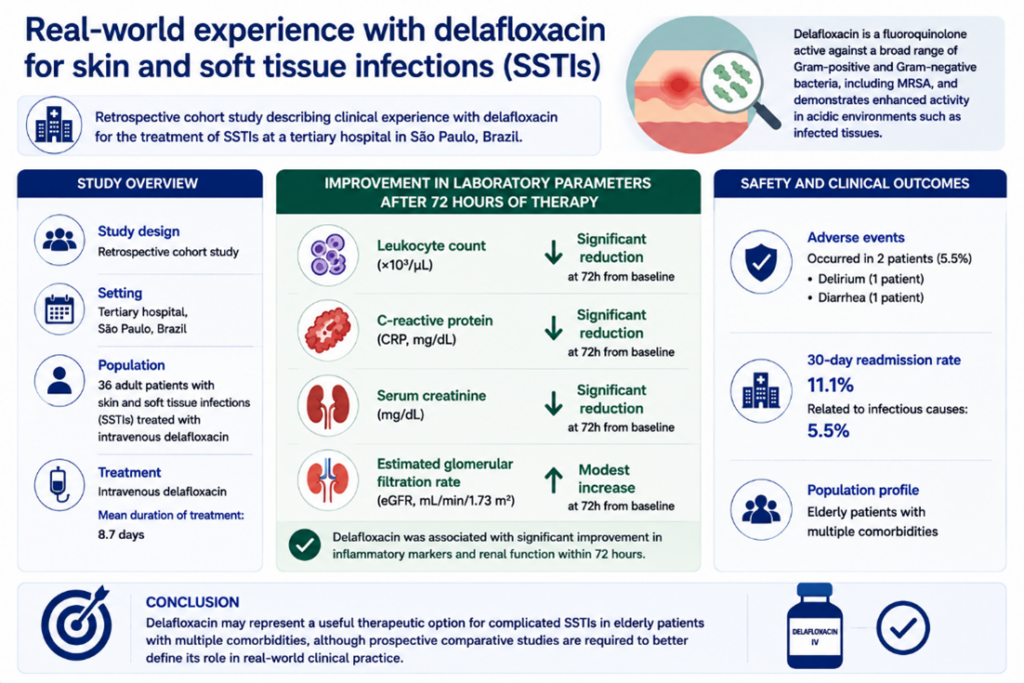
Delafloxacin as a new therapeutic tool for the treatment of skin and soft tissue infections: experience in a single center
Sato V. et al - Archives of Dermatological Research, 13 August 2026.
A retrospective cohort study evaluated 36 adults with SSTIs treated with intravenous delafloxacin at a tertiary hospital in Brazil. After 72 hours, significant reductions in leukocyte count and CRP were observed, together with improved renal parameters. Mean treatment duration was 8.7 days, while adverse events occurred in 5.5% of patients. The 30-day readmission rate was 11.1%, with 5.5% related to infectious causes. These findings support further prospective studies to define the role of delafloxacin in complicated SSTIs, particularly in elderly patients with multiple comorbidities.
In vitro activity of Delafloxacin against enterococcal isolates from male urinary tract infections and genetic determinants of resistance
Turban, A, et al – Microbiology Spectrum, Published 24 August 2026.
An in vitro study evaluated delafloxacin (DLX) and comparator fluoroquinolones against Enterococcus faecalis and E. faecium. Against E. faecalis, DLX showed greater activity than levofloxacin and moxifloxacin (MIC₅₀ 0.06 mg/L; 16- and 4-fold lower, respectively), with activity further enhanced under acidic conditions (3-log₂ MIC₅₀ reduction from pH 7.2 to pH 5), while comparator activity decreased. None of the agents showed relevant activity against E. faecium. These findings suggest a potential role for DLX in male E. faecalis UTIs, warranting further preclinical and clinical investigation.
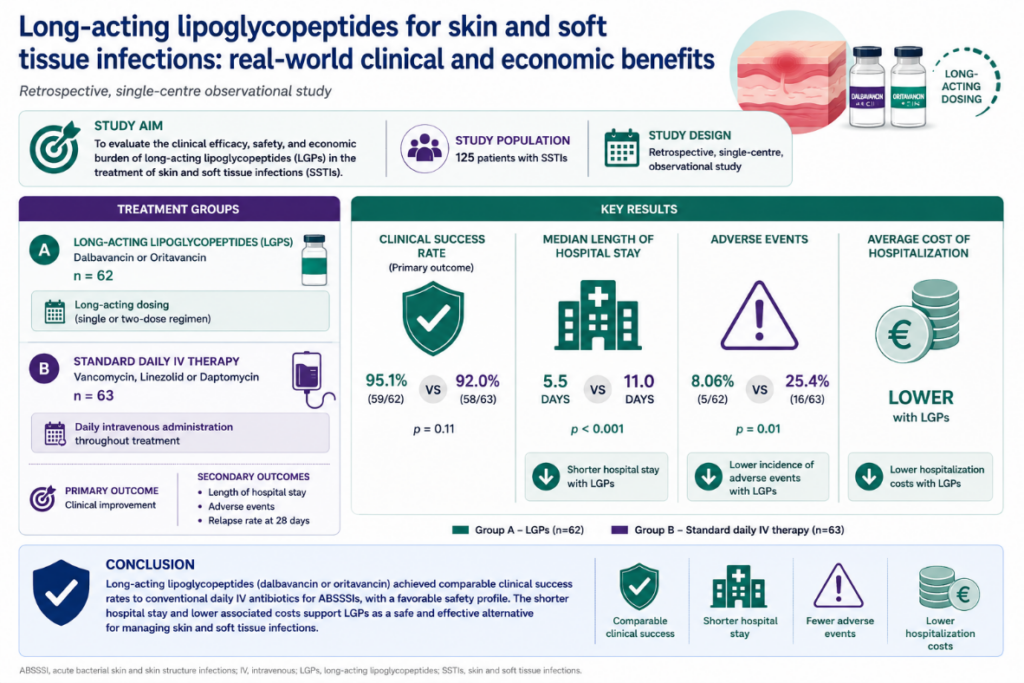
Clinical efficacy and safety profile of long-acting lipoglycopeptides vs daily intravenous antibiotics for acute bacterial skin and skin structure infections (ABSSSI): a retrospective study in Greece.
Petrakis V. et al – Journal of Chemotherapy, 1–11; published online 03 Aug 2026.
A retrospective study compared long-acting lipoglycopeptides (dalbavancin or oritavancin; n=62) with standard daily IV antibiotics (n=63) in patients with SSTIs. Clinical success was comparable between groups (95.1% vs 92.0%; p=0.11), while LGPs were associated with a significantly shorter median hospital stay (5.5 vs 11.0 days; p<0.001), lower hospitalization costs and fewer adverse events (8.1% vs 25.4%). These findings support long-acting LGPs as a potential alternative to conventional daily IV therapy for ABSSSIs, combining similar clinical outcomes with reduced healthcare resource use.
Precision Redosing of Oritavancin: A Population Pharmacokinetic Framework to Optimize Long-Term Therapy for Complex Gram-Positive Infections
Giuliano S. et al - International Journal of Antimicrobial Agents, Available online 29 July 2026-Article: 107943
A population PK analysis of 23 patients receiving oritavancin (249 samples) evaluated TDM-guided redosing strategies over extended intervals. Repeated dosing resulted in predictable accumulation, while 24-h concentrations strongly predicted AUC₇₂ (R²=0.93) and Day-7 concentrations helped identify appropriate 1-, 2-, or 3-week dosing intervals. Weekly and biweekly regimens achieved 100% Probability for target attainment (PTA) for the AUC₇₂ target at steady state, whereas <5% of patients were predicted to maintain trough targets with 4-week dosing. These findings support TDM-guided individualized redosing; without TDM, weekly dosing provided the highest probability of achieving PK/PD targets.
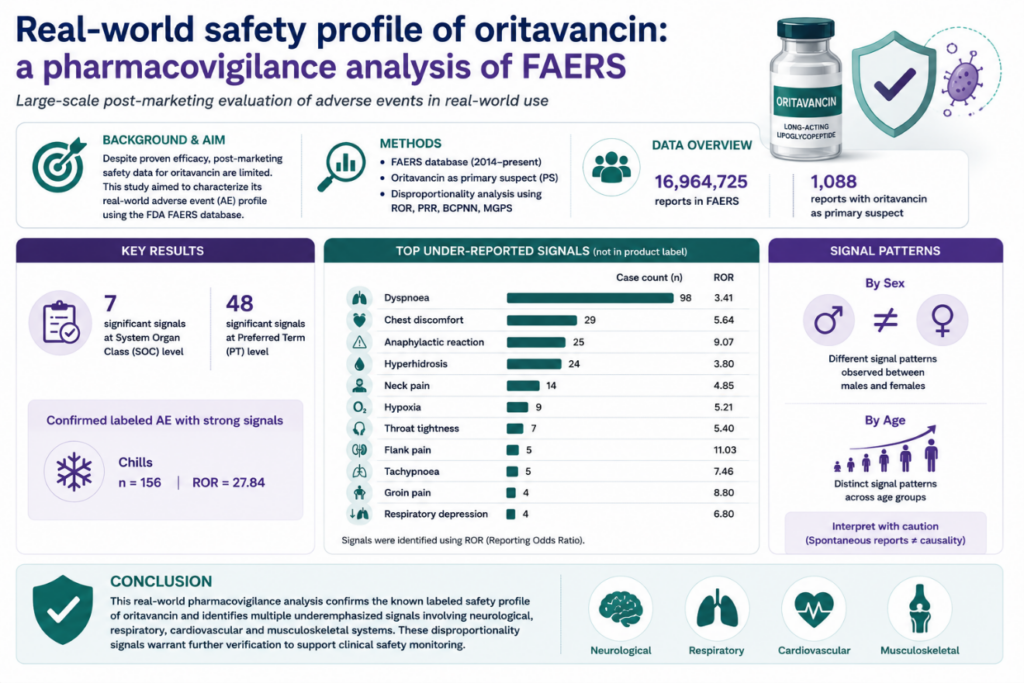
Oritavancin safety: a real-world pharmacovigilance study of the FAERS database
Bo Xie et al - Front. Cell. Infect. Microbiol - Sec. Clinical Infectious Diseases, Volume 16 -03 August 2026.
A pharmacovigilance analysis of the FAERS database identified 1,088 reports with oritavancin as the primary suspected drug, revealing 7 significant signals at the system organ class level and 48 at the preferred-term level. Known adverse events were confirmed, including chills (n=156; ROR 27.84), while additional signals included dyspnoea (n=98; ROR 3.41), chest discomfort (n=29; ROR 5.64) and anaphylactic reactions (n=25; ROR 9.07). These findings expand the real-world safety characterization of oritavancin, although disproportionality signals indicate statistical associations rather than causality and require further validation.
Competitors
Metabolic reprogramming enables transient survival and envelope remodelling in Staphylococcus aureus under dalbavancin treatment.
Hussein M. et al – Npj Antimicrob Resist. Published online 07 Aug 2026
An experimental study identified a transient survival phenotype under dalbavancin exposure across genetically diverse S. aureus strains, including vancomycin-susceptible and -intermediate isolates. Multi-omics and imaging analyses linked delayed killing to metabolic adaptation and cell-envelope remodelling, including altered peptidoglycan biosynthesis and heterogeneous cell-wall thickening. Disruption of peptidoglycan assembly reduced survival, supporting an adaptive and reversible mechanism rather than stable genetic resistance. These findings provide a potential mechanistic explanation for dalbavancin treatment failure in the absence of measurable resistance.
Long-Term Suppressive Antimicrobial Therapy in Prosthetic Vascular Graft Infection: A Retrospective Evaluation of a Cohort of Patients Enrolled at Tor Vergata Hospital in Rome.
Imeneo, A. et al - Open Forum Infect Dis. 2026 Jun 5;13(6):ofag327; published online 5 June 2026.
A retrospective study evaluated 25 patients with prosthetic vascular graft infection (PVGI) receiving suppressive antimicrobial therapy (SAT). Infection control during SAT was achieved in 40%, while 10 patients discontinued therapy and 60% remained relapse-free for >6 months. Long-acting antibiotics were used in 24% (6/25) of patients, with successful discontinuation in 3 cases. These findings support SAT as a potential option for selected high-risk PVGI patients and suggest a possible role for long-acting antibiotics, while further studies are needed to define optimal treatment duration.